
Providing valuations carries a responsibility to serve the public interest. Like any profession, appraising is governed by specialized rules designed to protect that interest. These rules guide practitioners in their work and strengthen public trust in the profession.
Professional societies often set ethical and practice standards, but membership is not required to follow them. An appraiser may adopt and declare adherence to a set of standards without being part of the issuing society. Similarly, one does not need to belong to a society to act as an expert witness.1 Courts, however, frequently look to society standards for guidance when shaping case law.2
Unethical conduct is not excused by ignorance. Appraisers cannot avoid responsibility by claiming they were unaware of ethical rules or professional standards. Such behavior not only exposes them to legal and professional consequences but also damages the reputation of the field.
It is important to recognize that ethical duties extend beyond legal obligations. An appraiser may act unethically without breaking the law, as ethics govern conduct where the law does not.
The legal and professional landscape is constantly evolving. Information once considered accurate may no longer hold true, and today's accepted practices may be revised in the future. Courses that simply repeat outdated material risk teaching obsolete methods. For this reason, enrollees are encouraged to revisit these topics regularly. This research tutorial will also be updated as new developments emerge.
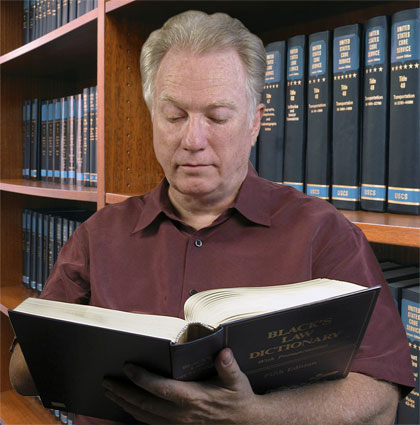
Before moving forward, a brief note of context is important. If you are an appraiser practicing outside the United States, this research tutorial is not designed for you. While you are welcome to take it, the content is based entirely on U.S. practice. Appraisers working elsewhere should pursue training specific to their own legal systems or adapt the concepts here in light of their country's requirements. Be cautious of courses that advertise themselves as "international." Because every country has its own legal framework, a truly international course would require research and presentation of each country's laws. In short, there is no universal, one-size-fits-all valuation course. Even within the United States, each jurisdiction3 may have its own requirements, definitions, and interpretations.
This research tutorial also differs from many appraisal programs in that it does not teach product knowledge. Most books and courses in this field focus heavily on describing property and teaching the skills needed to identify or grade items. By contrast, this research tutorial is dedicated solely to appraisal methodology. For example, if you are a gemologist-appraiser, this research tutorial will not teach you how to describe or grade jewelry or gemstones - it will instead teach you the principles and reasoning behind valuation.
It is equally important to note that this research tutorial does not provide legal advice. Legal references are included only to illustrate the foundations of certain valuation principles. For any legal guidance, you should consult an attorney authorized to practice in the relevant jurisdiction. With those clarifications in mind, here are some highlights to prepare you for genuine learning ahead.
This first section introduces the fundamentals of economics and value theory. Appraisers must understand the principles of fair market value, the cost approach, and other key valuation concepts. In insurance, valuation is not a one-size-fits-all process. Different types of insurance assignments require different approaches, and several of these will be addressed in the next segment of tutorials.
Appraisers carry responsibilities to both the public and the profession. This section reviews the standards - essentially the "rules of the road" that guide ethical practice. These are not meant to be surprising or difficult; rather, they reflect common sense, sound judgment, and practices that are straightforward to apply.
The core of this research tutorial is understanding insurance and how to prepare reports for insurance-related assignments. Insurance involves four key areas:
1. The history and structure of the insurance industry,
2. Appraisals for obtaining insurance,
3. Appraisals for casualty loss, and
4. Work within a dispute resolution panel.
Studying the history of insurance provides important context for the terms and principles in use today. For example, where does the term "floater" originate?

The most common appraisal is one used for obtaining insurance. Unfortunately, it is also the most misunderstood. This research tutorial will clarify the assignment for both beginning appraisers and experienced valuation professionals.
Occasionally, you may be retained to provide an appraisal for casualty loss. These assignments vary significantly depending on the policy type, jurisdiction, and whether the loss is partial or total. There is no single format that applies to every case.
All the theory is useless if you do not submit it in a report. This research tutorial does not provide an example of a Supplemental Information Letter (SIL), also known as a cover letter, nor does it include sample appraisal reports. A SIL template can be generated through the SIL script available at www.appraiserunderoath.com →
For a more in-depth study of report writing, students are encouraged to partake in the Advanced Personal Property Appraisal (APPA) research tutorial. That program also offers the most comprehensive methodology training available to appraisers who wish to expand beyond insurance.
The purpose of this research tutorial is to introduce appraisers to basic ethics, valuation theory, and appraisal principles, while also emphasizing that appraisal must be embraced as a professional discipline. This research tutorial is intended as a contribution to professional practice - not as a replacement for outdated courses and not as another credential for display.
Use what you learn here to strengthen your work and to enhance the public's trust in both your appraisals and the profession as a whole.
Some information revealed in this research tutorial is not found in any appraisal course, book, seminar, or article. It was researched exclusively by the author. If you use the researched information from this research tutorial for an article or other scholarly effort -include proper attribution and the courtesy of informing the author with a copy or link. The contents of this research tutorial are protected by Copyright © Bill Hoefer 2021.
Since the legal arena is a moving target, expect updates and changes on an ongoing basis.
Are you ready to walk with me through the matrix of insurance appraisal methodology?
Bill Hoefer

|
Economics |

|


|


|


|


|


|


|


|


|


|


|


|


|


|
|
|


|
|
|


|
|
|


|


|


|


|
|
|


|
|
|


|
|
|


|
|
|


|


|


|


|


|


|


|
|
|


|


|
1. 553 F.2d 1013, 42 A.L.R. Fed. 213, 1 Fed. R. Evid. Serv. 1333; 580 F. Supp 507. Back to Text ↑ ↑ ↑
2. 94 T.C. No. 33, 94 T.C. 570, Tax Ct. Rep. (CCH) 46,522, Tax Ct. Rep. Dec. (P-H) 94.33. Back to Text ↑ ↑ ↑
3. Fifty states and the federal government for this course. Thus, commonwealths, territories, etc. are not included. Back to Text ↑ ↑ ↑
4. Illustration - Istockphoto.com and author combination.
5. Illustrations - Istockphoto.com.