
MAKING the MARK - Gem Guide, September - October 2009
Referred to as "Mark Research," it is the examination and identification of marker and purity marks that are stamped jewelry. Marks indicating the country of origin are sometimes obvious. Other times, they take deciphering the codes of the marker. Marks may also serve to circa date an item of jewelry.
The practice of appraising has been exploding for more than 20 years, spurred by a small but aggressive group of trained valuators determined to make appraising a true profession. Seemingly, books have been published overnight unequal to any previously in print. As is true of dedicated research, whenever there are adequate trained professionals, detailed scholarly works will inevitably follow. Jewelry specialists can now decipher the marks found stamped in and on items of adornment.
Can an article reduce the vast amount of information such marks reveal? No, but it can alert you to Sample hallmarks. https://www.hallmarkresearch.com/ what you need to hone your appraisal skills. With that in mind, I begin with some fundamentals.
If you were to study the appraisals of others, it would not take long to realize that many appraisers consider certain terms synonymous. For example, in London, a goldsmith must submit what he or she makes to the Hall of Goldsmiths. There, assayers will test the metal and properly mark the item with the fineness, town mark, optional date mark and the goldsmith's registered trade mark. Thus, the term 'hallmarked' derived from the 'hall' where it is assayed. Several countries have similar laws and requirements. American goldsmiths, on the other hand, make and stamp their own pieces. If you want to be technically correct, American items have the option to be stamped with fineness and makers' marks but are not hallmarked.1
With true foreign hallmarks, you can trust the fineness of the precious metal mark and often the date when it was tested, the maker and where it was assayed.
"Passport Please"
Marks indicating the country of origin are sometimes obvious, such as seeing a piece marked "Italy." Sometimes, the type of mark will be evidence of the country of origin, even if the country's name is not included, as encountered with the British hallmark system. Although interesting, country of origin marks are thought to be a waste of research time to most appraisers. They are only interested in the gold karat mark.
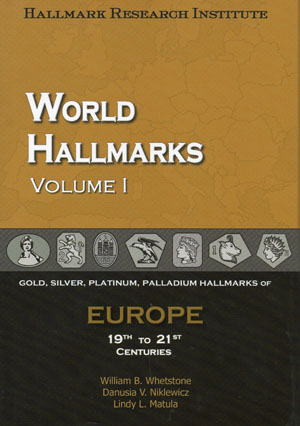
"Nothing could be further from the truth," insists Danusia Niklewicz, a hallmark expert. She recently coauthored the World Hallmarks Volume I - Europe, 19th to 21st Centuries, "When researching value, country of origin and workmanship is important to the value conclusion. Hallmarks can reveal more information than just country of origin."
She discussed an example of a piece of jewelry that is unmarked. You will have an opinion of the proper value approach for it. If you then find a mark indicating that it was made in France, your research of value would immediately change. On the other hand, if that mark indicated the Orient, you will change your approach to researching the value once again.
Niklewicz alluded that country of origin marks may hold other information for diligent appraisers. She stated that the date, provenance, fineness, and other details might be decrypted from a country of origin mark. The country of origin is a recommended detail to be included in the description.
"Give Me Your John Hancock"
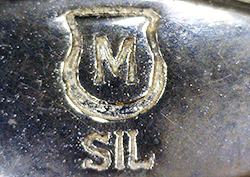
Although hallmarks are important, that is not the only important mark to research. Maker marks (and trademarks) are also significant. A new trend among jewelers is to sign their pieces. This can be a blessing if the appraiser recognizes the mark and can possibly contact the maker and gain valuable market value information. To be sure, there are artists in the arena of jewelry. These artists are collectable and may compete in art contests, participate in showings and often display their wares in galleries.
20th There are also artisans-jewelry markers who are not artists but act as if they are. You have to determine who is and who is not an artist in your area of practice. "Artists render pieces that are executed with a high degree of craftsmanship and technique, emphasizing their creativity and originality," according to Christie Romero, a jewelry historian and author of Warman's Jewelry, a price and identification guide to 18th , 19th and century jewelry. She is also the director of the Center for Jewelry Studies. She continues by underscoring that characteristic of artists is that they display at shows that cater to such works, not akin to local craft shows in malls. She further explains that creativity is a basic element of an artist. She pointed out that artists do not copy others. They are not knock-off artists. Artists' signatures have marketable provenance that affects value. Artisans do not.
If you were to ask a fine art appraiser to differentiate fine art from decorative art, you will discover that similar to our trade, there are artists that are recognized as such. There is also mass produced art without any marketable provenance. The difference in value is significant. If it is an artisan, then the value research may be handled like custom or special order work. Market research is not confined to the artisan but to goldsmiths in general. On the other hand, an artist is handled similar to a copyright holder. Research the artist, or better yet, contact the artist.
"Valuing artist rendered pieces is based upon the same valuation principle as non-artist pieces - supply and demand," advises Romero. "If an artist's work is highly sought-after but scarce or one-of-a-kind, it will be worth more. Keep in mind that the market for art jewelry is coupled to the whims of the collectors."
Designers have a different fit into the scheme of makers. They seem to be somewhere between the artists and artisan. Their signatures do not carry the value influence of marketable provenance but they are creative and original. Thus, many designers are artists while some are artisans.
"Due diligence is required and even designers connected to small shops must be diligently revealed and contacted. After all, it is their design and replacement must be from the same source not just anybody," says Niklewicz. Her advice if you cannot recognize the mark? Include a facsimile of the mark so a replacement service can attempt to contact the designer.
Trademarks Are Not "Traded"
Trademarks, aside from quality marks, are the second most encountered marks on a piece of jewelry. Trademarks can be on the box, bag, an attached tab, clasp (as with Mikimoto), etc. The principle of indemnity demands that a trademark be researched. If it cannot be deciphered, then state that a trademark exists that is un-attributed. If it can be attributed, then state the company and all other information pertinent to the item.
What information can a trademark reveal? The location of the company and when the item may have been made (called circa dating), might be determined from the trademark. Researching values is easy whenever a trademark is determined and the company still exists. Circa dates are also important to collectors of antique and period jewelry. If you, for example, determine a piece to be from the late 1940s, a trademark may confirm your conclusion.
When researching maker marks, do not forget that sponsors' marks exist. These marks are usually companies that mark an item that was actually made by another individual or company. For example, pieces signed Tiffany & Co., may indicate that Tiffany may have sponsored quality workshops to produce the pieces for them.
Although several books exist that either have some marks or specialize in marks, there is an online resource available at https://www.uspto.gov/ Thousands of trademarks are available on this site. Once a mark's data is viewed, it has the date of registry, date of abandonment if dead, name of the company, where the company is, date of first use in commerce if known and a graphic (if not a typed trademark). Although comprehensive, books are easier and faster to research. Related to trademarks are copyrights.
Copyrights
Keep in mind that a copyright is not the same as a trade mark. A copyright is for the design or as defined on the government website: " . . . 'original works of authorship' including literary, dramatic, musical, artistic, and certain other intellectual works.'" Valuing a copyrighted item is a breeze - simply use the copyright holder or authorized agent for value research. They, and only they, can sell the item and knock-offs do not count. Not all marks are as straightforward and some marks are in-house marks, such as style or part marks.
Do It with Style
Items made from multiple adjoining pieces may have a style or part mark. Old pocket watch cases often have numbers used for matching the parts during the assembly process. Some manufacturers have style numbers marked on their pieces. Most appraisers note these marks and they can be used when talking with the maker for price information. For a proper replacement, a style mark is very useful.
If you encounter mismatched numbers, make a more detailed examination to ensure that the integrity of the item has not been compromised, as that will directly affect the value.
Other marks that are most often associated with watches are serial numbers. These can reveal dates of manufacture, the style and other important information. In fact, some watch marks are coded as to the metals, bracelets, etc. for the watch at hand. This is a significant resource for determining if after-market parts, counterfeiting or swapped parts for genuine parts are involved. Rings, as an example, do not usually have serial marks but may have a mark revealing the carat weight.
From the Scale to the Ring
When grading gems, the only process that is not subjective is weighing the stone. Once a gem is mounted, how ever, determining its weight is very subjective. Rarely will a calculated weight from measurements or a template be exact. What a blessing it is to find the weight of the center stone or accent stones stamped on the jewelry item! Do not be afraid to mention this weight and use it for valuation purposes. It is advisable to state the estimated weight and then state the exact weight in the description.
And Finally . . .
Niklewicz sums up mark research by echoing her previous advice that, "Achieving indemnity is not just confined to antique and period jewelry. Indemnity is a maxim principle across the board. To report otherwise encourages counterfeiting and ambushes the unsuspecting replacement person." If it impacts value, then include the information in the description. If indemnity would be undermined by not including the information, then by all means, include it. Better to state too much information than to understate.
Written by Bill Hoefer

|

|

|
|
|
|

|
|
1. Although many appraisers state "quality marked" in appraisals, according to Danusia Niklewicz only an independent assay can certify fineness - a procedure that is rare amongst American goldsmiths. Back to Text ↑ ↑ ↑
2. Published in Gem Guide, September-October 2009.
3. Illustrations - IStock.com.
4. Maker Mark llustration - by author.