
An 1862 court case involving jewelry fraud stated, "It is a matter of everyday occurrence to find various grades of manufactured articles known more generally by their prices than by any test of their quality which can be furnished by ordinary inspection. Frauds are easily committed by dishonest dealers, by confounding these grades, and cannot be detected in many cases except by persons of experience. In the case before us, the alleged fraud consisted of false statements by a jeweler to an unskilled purchaser of the value of articles which none but an expert could be reasonably supposed to understand. The dealer knew of the purchaser's ignorance, and deliberately and designedly availed himself of it to defraud him."1
Regardless of whether you embrace and seek to be an expert witness or not, odds are you will one day have to testify as an appraiser.
I Swear
The moment you are sworn in, you are under oath. No matter what, always tell the truth.
You are not an advocate. You do not win or lose cases; the attorneys do. Expert witness bullies often brag about how many cases they have won. Do not be intimidated as most lack an in-depth understanding of how evidence and proof are linked.
You are part of the process of building proof. "'Proof' is the establishment by evidence of a requisite degree of belief concerning a fact in the mind of the trier of fact or the court."2 Think of it like building a wall. The completed wall is proof. The bricks used to build the wall are evidence. Each side presents evidence. Some evidence will be used as bricks, and some will not. Your testimony is a batch of bricks. How you present them is the key to success as an expert witness.
What Is Questionable?
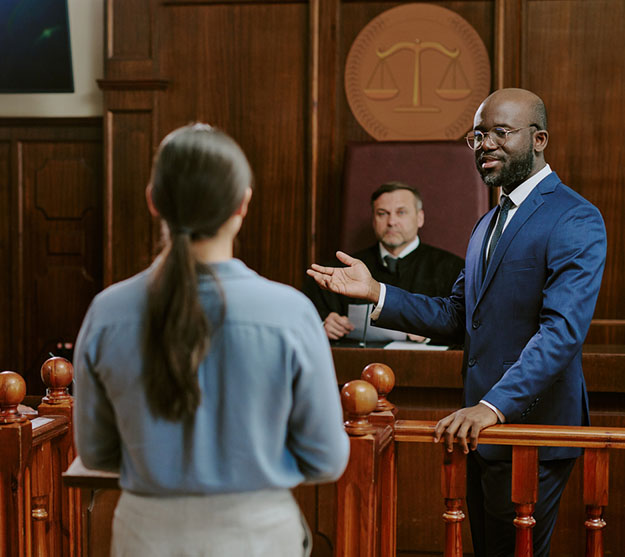
You will be asked different types of questions.
Open questions are inquiries that let an expert witness tell the trier of fact (the judge or jury) about something in a narrative format. For example, the retaining attorney may ask, "What were the various gemological tests you performed to determine the gemstone was natural?" On the other hand, closed questions are meant to get precise answers. The retaining attorney may ask, "What weight was the ruby?" If being questioned by the opposition, expect leading questions. These suggest a response being sought. The opposing attorney might ask, "The emerald was enhanced, wasn't it?"
There is a question for which the answer is considered evidence even though it may contain proven facts and assumed facts. The attorney may ask, "What would the value of the pearl be if it were natural instead of cultured?" Always answer a hypothetical question by first saying, "The answer to your hypothetical question is . . . "
Face the Trier of Fact
When you are under direct examination, face the trier of fact, the judge if no jury is present, or the jury if one is present. However, when enduring cross examination, face the opposing attorney questioning you. Do not answer questions instantly, or the first time you need to think out an answer, you will appear to be making up a response. Likewise, do not make long hesitations either.
Teach the Court
It is recommended you attend a few trials in which expert testimony is provided. You will notice they talk over everyone's head. That is not a bad thing, but it does not persuade the trier of fact if they cannot understand you. Let the opposition be confusing. Pretend that you are teaching a 6th grade class. First say it as an expert, and then say, "In other words . . . " Then repeat what you said so 6th graders can understand. Be a teacher. The jury will now see you as their teacher. Most people love their teachers. They will not be favorable to the opposition bashing you on the witness stand during cross examination. After all, it's their teacher that's being harangued!
But Wait - Are You Qualified?
Maybe you feel you aren't quite qualified as an expert witness. After all, the notorious expert witnesses in our arena have multiple earned designations, society memberships, authored books, etc., as part of their professional profiles.
What is a qualified expert witness? Does one have to be a gemologist? Does one have to have training as an appraiser? Does one have to be a member of a professional society? Or is an expert witness's testimony like a case stated in 1961 when it announced, "Expert opinion, which is only an ordinary guess in evening clothes . . . "3
The court, a judge, decides if you are qualified as an expert witness or not. Most likely, depending on the jurisdiction and type of court, a person will be considered an expert if he or she has special knowledge, skill, experience, training, or education sufficient to qualify them on the subject at hand.4 And the qualifications are not narrow, as emphasized here: "Not limited to a narrow test of qualifications, certificates of training, memberships held in related professional organizations or being an outstanding practitioner in the field of professed expertise."5
Comply With What?
One of the vulnerabilities as an expert witness is compliance with standards. If you state that your report follows a set of standards, be certain it does. If the opposition finds anything out of compliance, you will experience a severe cross examination. If you are a member of more than one society, for example, be certain you follow each one's mandatory standards. That may mean rendering a report selecting the hardest standard to follow. For example, if one society states you must diagram (plot) diamonds weighing 1 carat or more and the other society states that diamonds are to be plotted if they weigh 0.50 carats and above, plot using the lower-carat standard.
This becomes more difficult when societies are not in sync with value methodology. That calls for the expert witness to render a report that complies with both approaches, called a Broad Evidence report. To comply with one society of which you are a member and not the other is an invitation to be crossly examined (pun intended). "Yes or no: did you render this report in compliance with the XYZ Appraisal Society's professional standards?" If your answer is no, the opposing attorney will end his questioning by saying, "No further questions, Your Honor." That will blast your credibility to pieces.
Negatives First There are very few appraisal assignments that are perfectly handled. If you only have photos to use since the actual pieces are not available, your appraisal will be packed with assumptions. What if your examination was in a property room in the local police department with bad lighting and no plug? The list of negative aspects can be endless.
Have the retaining attorney bring up any negatives in an open-question format, so you can explain them in narrative format. This serves to limit the cross examination from making your negatives look like unprofessionalism as well as being hit with a closed question that acts to erase your professionalism.
Written by Bill Hoefer

|

|

|
|

|
|
1. 11 Mich. 68, WL 1130. Back to Text ↑ ↑ ↑
2. California Evidence Code § 190. Back to Text ↑ ↑ ↑
3. 404 PA 168. Back to Text ↑ ↑ ↑
4. California Evidence Code § 720. Back to Text ↑ ↑ ↑
5. 553 F2d 1013. Back to Text ↑ ↑ ↑
6. Published in Gem Guide, May-June 2024, Volume 43, Issue 3, pages 20-21.
7. Illustrations - IStock.com.