
"They were trying to embellish their lovely lady humps. More than 40 camels were booted from a Saudi Arabian beauty pageant after getting administered Botox, hormones and other appearance enhancing techniques. This marks the biggest crackdown in the contest's history."1
Although camels may need gallons of Botox to become beautiful, gemstones that are naturally beautiful may need some cosmetics, called enhancements, in much smaller amounts to embellish them. Regardless of the amount, disclosure is key.
Making a Federal Case
Federal guidelines are the usual basis for mandatory disclosure of gemstone enhancement cited by the trade. Here they are:
"Disclosure of treatments to gemstones. It is unfair or deceptive to fail to disclose that a gemstone has been treated if: (a) The treatment is not permanent. The seller should disclose that the gemstone has been treated and that the treatment is or may not be permanent; (b) The treatment creates special care requirements for the gemstone. The seller should disclose that the gemstone has been treated and has special care requirements. It is also recommended that the seller disclose the special care requirements to the purchaser; or (c) The treatment has a significant effect on the stone's value. The seller should disclose that the gemstone has been treated. Note: The disclosures outlined in this section are applicable to sellers at every level of trade . . . and they may be made at the point of sale prior to sale, except that where a product can be purchased without personally viewing the product (e.g., direct mail catalogs, online services, televised shopping programs), disclosure should be made in the solicitation for, or description of, the product."2
The problem is that (1) this is a federal regulation and has no jurisdiction on transitions within a state, though some states have adopted the federal guidelines, and (2) it is for sales and not appraisals. What does an appraiser need to disclose when valuing a gemstone that has been or possibly has been enhanced? The federal regulation did mention value (item c above), but the word "significant" is too nebulous for precise evaluation guidance.
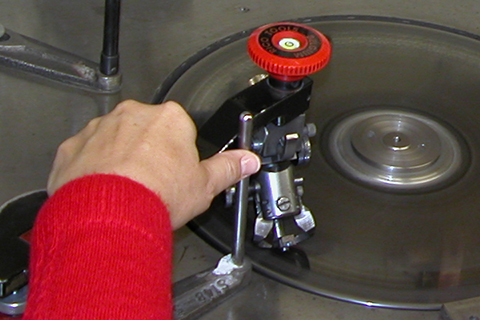
Martha Hoefer cutting a diamond.
Ethics and Common Sense
Ethics take over where the law does not exist.
One of the tenants of appraising is to state all value elements, regardless of whether they are positive or negative. Is gemstone enhancement a value element? Yes. Gemologist-appraisers know that some unenhanced gemstones are more valuable than their enhanced counterparts. Thus, gemologist-appraisers have an obligation to point out enhancement.
Makeup for Emeralds
Collectors seek treasure emeralds recovered from sunken ships; they're considerably more valuable than normal emeralds. Imagine appraising treasure emeralds collected from the sea floor from a 400-plus-year-old sunken Spanish ship!
Such was the case in the early 2010s, when an American businessman came forward, claiming he had found emeralds off the coast of Florida.
"Investors, lawyers, employees of the Smithsonian, appraisers, jewelers, family, friends, the general public, and many others, including investigative reporters from CBS' '60 Minutes', agreed that treasure had been discovered and recovered from the seafloor in early 2010. . . . Of course, millions of dollars were invested."3
If the appraisers, who were working for a major auction house, had evaluated the emeralds with due diligence, they would have curtailed a major scam early on and saved millions of investment dollars. Provenance could have been correlated through enhancement.
An investor " . . . has been informed . . . that the French lab, Swiss lab, and American lab all believe that the emeralds they evaluated could not have been lost in the sea prior to the beginning of the 20th century. Research . . . has disclosed that epoxy did not exist prior to the 1930s . . . . Because of the information provided by all of the laboratories, it now appears that the source of the emeralds, amethysts, and quartz crystals could be one of these 'modern' shipwrecks."4
Circa Date Circus
If one appraiser had disclosed the enhancement, then the scam would have been exposed early on.
To be an emerald from a 400-plus-year-old sunken Spanish ship, the emeralds would not have enhancement that dates from the 1930s, and their inclusions would indicate a Colombian origin and not that of another country, such as Brazil, where gemstones weren't discovered until the 1920s.
Unfortunately, it is most likely the appraisers' valuations were used to convince the investors to capitalize in the scam. But what about the idea that the emeralds were from a modern-day vessel?
Dealer to the Rescue
An emerald dealer, Mr. R [name redacted], bravely stepped forward to inform the court that the emeralds were purchased " . . . over four visits in March, May, August, and September." Each trip, Mr. M [name redacted] purchased approximately 20 pounds of emeralds for about $20,000 for a total of approximately $80,000. By purchasing the emeralds and then "finding them" at the bottom of the ocean, Mr. M engaged in fraud to vastly increase their value as purported "sunken treasure."
After Mr. R's testimony on the third day of the hearing, the court knew the allegations contained in the complaint were not true. Any emeralds that Mr. M "discovered" were put there by him and his dive partner, Mr. E [name redacted].
Mr. M was clearly the mastermind behind this whole scheme. He believed he would be able to get rich fast and live out his dream as a successful treasure hunter. He did not, however, foresee the many steps that he would have to take, and the many processes that he would have to go through, before the dream that he concocted would be come a reality. He also did not foresee the number of people that would become involved and stake an interest in his treasure.5
Degree of Enhancement
The Gemological Institute of America defines the degrees of enhancement on emeralds as such: "On a laboratory report for a treated emerald, what does F1, F2, and F3 mean? This is a judgment of the degree of clarity enhancement: minor (F1), moderate (F2), and significant (F3). 'Minor' enhancement indicates the treatment has had only a slight effect on the face-up appearance, whereas 'significant' indicates an obvious effect on the appearance."6
Be careful when reading gem laboratory reports. The knee-jerk reaction to seeing the enhancement degree as "significant" is to believe the stone is dripping with enhancement. An emerald with a single small surface blemish that becomes invisible when enhanced is "significantly" enhanced. And, likewise, an emerald that has numerous noticeable blemishes that are still visible after heavy enhancement will be classified as "minor." And if the price guide uses an enhancement grading system that does not equate to a laboratory's system, the result will be a misvalue conclusion.
For example, to directly use GIA's enhancement degrees to determine a price using the GemGuide will not work. Yes, the terms "slight" (minor), "moderate," and "extensive" (significant) are mentioned and equal to GIA's terms. But the GemGuide states, "GemGuide prices are based on the assumption of a moderate level of treatment."7 In other words, it is not the effect of treatment but rather the level of treatment upon which the prices are based.
What Do You Say?
Thus, the gemologist-appraiser should reveal the amount of treatment as well as the effect.
Three situations may exist: the gemstone is enhanced; it is not enhanced; or it's not certain if it is enhanced but, given the type of gemstone, is most likely enhanced. And, using the FTC Guidelines for guidance, one should include the durability and care for the enhancement.
Consider including a general statement such as: "Unless otherwise stated, [gemstones or specifically name a gemstone] listed in this appraisal report may have been subjected to clarity or color enhancement process(es). Some treatments are undetectable without specialized instruments that are beyond the capability of this gemologist-appraiser, and it is recommended that a major gemological laboratory be used to determine the extent of enhancement. Gemstone enhancements are widely practiced and accepted by the gem and jewelry trade. For gemstones commonly enhanced, values are based upon the assumption that enhancement has been performed."
This works if the gemologist-appraiser cannot be certain that enhancement exists but knows it's a common practice with the gemstone being appraised.
Of course, if you know that treatment exists or does not exist, state that in the valuation. Then consider also stating that, "Such treatments are usually stable [or unstable]." This clause will need enhancement (pun intended) with a mention of care needed to preserve the treatment. For example, consider this: "If you clean emeralds with an ultrasonic cleaner, steam cleaner, or chemicals, they may lose their enhancement, causing a reduction of tone. Have a professional clean your emerald jewelry."
Value Elements
To a gemologist-appraiser, enhancement can have a profound influence on the value conclusion. Additionally, it may alter the decision-making process of your client and authorized third parties who will rely on the report.
Even with the commonplace insurance appraisal, a well-masked, previously existing damage will allow an insurer not to pay a claim. (Insurance does not cover pre-existing damage. Thus, a fracture masked by enhancement cannot be the basis for a damage claim since it was pre-existing to the insurance obtained).
In other words, the intended use of the appraisal does not eliminate the need to disclose enhancement. Disclose, disclose, disclose.
Written by Bill Hoefer

|

|

|
|

|
|
1. "Camels Kicked out of Beauty Pageant for Using Botox, Lose $66M Prize," by Ben Cost, New York Post online. Back to Text ↑ ↑ ↑
2. 16 C.F.R. § 23.24. Back to Text ↑ ↑ ↑
3. 2014 WL 12503330. Back to Text ↑ ↑ ↑
4. Ibid. Back to Text ↑ ↑ ↑
5. Ibid. Back to Text ↑ ↑ ↑
6. "Frequently Asked Questions," Gemological Institute of America website, https://www.gia.edu/gia-faq-analysis
grading-treated-emerald-f1-f2-f3. Back to Text ↑ ↑ ↑
7. "Reconciling Emerald Treatments," GemGuide, Vol. 41, Issue 6, Page 57. Back to Text ↑ ↑ ↑
8. Published in Gem Guide, November-December 2024, Volume 42, Issue 2, pages 13-15.
9. Article illustration by Bill Hoefer.
10. Other illustrations - IStock.com.