
THE VALUE OF ATTRIBUTION - Gem Guide, July - August 2024
Not every provenance may be marketable. Here's what appraisers should know about provenance and how it affects value.
Bored with your work? A classic car restorer Kevin Duckett, whose hobby was metal detecting, saw in 2017 what he thought was foil sparkling in the dirt of an English field. It was not foil but an enameled gold figurine of approximate 2.5 inches height. It turned out to not only be a valuable artifact but one that depicted the 15th century King Henry VIII! The figurine is now being researched as possibly having been mounted in the Tudor royal crown! It's thought to be valued at over $2 million.1 That is what providence is all about!
Or Is It?
Provenance is defined as: "The origin of a piece; the history, location, previous or current owners, period in which made . . . "2 Additionally, "provenance is the origin and history of the property, (e.g. past ownership, exhibitions showing the item, literature mentioning the particular property, etc.)."3 However, market activity determines if an item will have value due to its provenance. After all, provenance may not be marketable.
Personal Providence
An item may be valuable to an owner but not have market value linked to provenance. For example, a family heirloom may be greatly coveted by a relative but not by outsiders. A wedding band I made for a friend, who happened to be a sheriff, saved his finger. While cleaning his weapon, it discharged and shot the bottom of the ring and ricocheted out a window. The ring (Figure below) was cut off his finger at the hospital. I covet the ring, as does my daughter, his goddaughter. But others would see it as mere scrap metal. What type of provenance has worth?
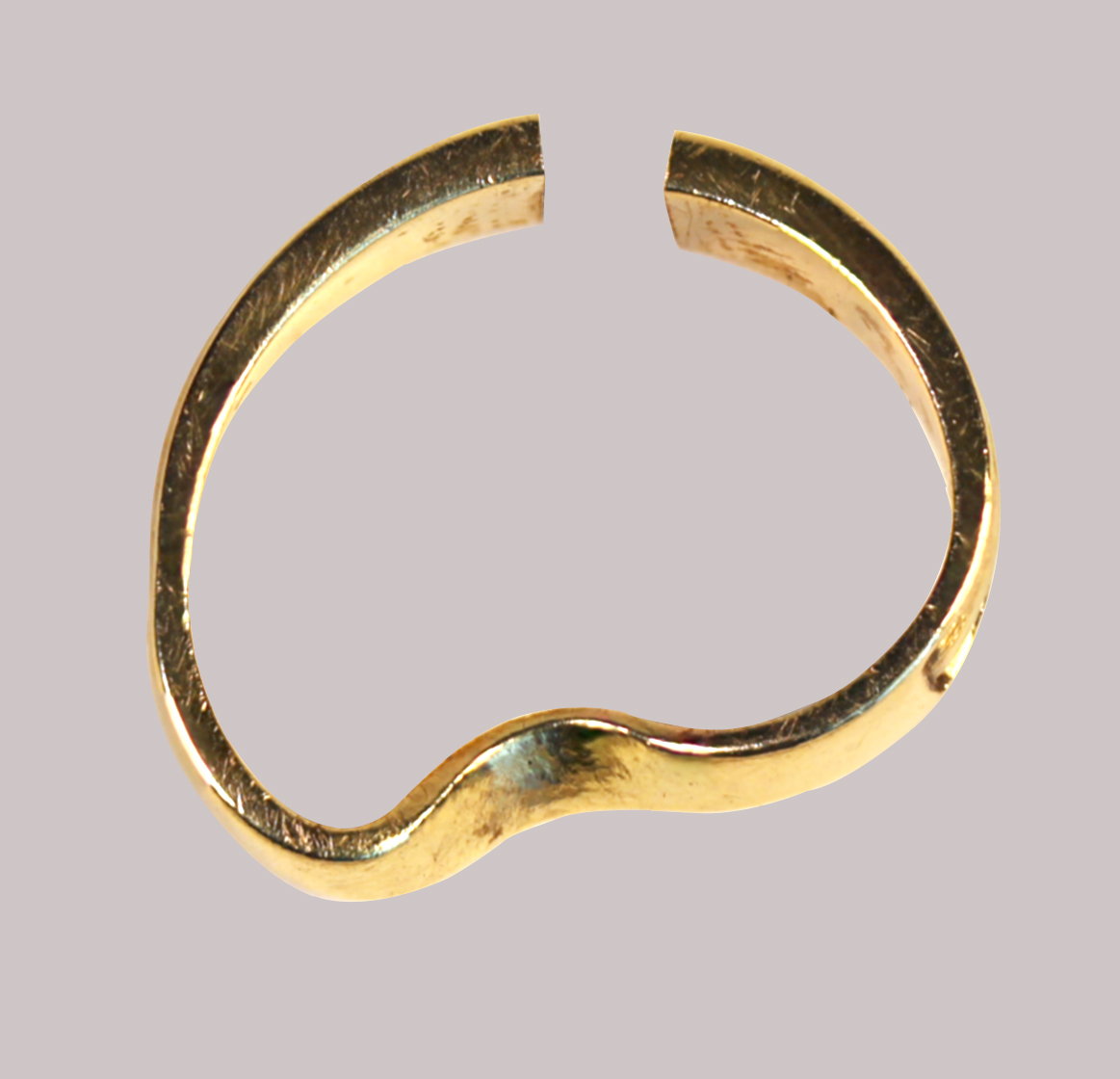
Figure - 1 - The wedding band the author made for a friend (Rick Tipton) ended up saving his finger-while the latter cleaned his weapon, it discharged and shot the bottom of the ring before ricocheting out a window. The ring had to be cut off his finger later at the hospital.
Value Elements
For an item to have value, it must have value elements. When we grade a diamond to determine its quality, we have the 4Cs (of course, there is an unspoken fifth C: certificate). Each C is a value element. Everything we deem important in evaluating an item is a value element. In seeking comparative items in a market or utilizing a price list, value elements are used. Sometimes value elements increase worth, and sometimes they can decrease the value.
Marketable Provenance
A ring once owned by Elvis Presley would be worth more than the same ring without that legacy. And if that ring was worn by Elvis and can be seen in a movie in which he starred, that adds more to the value.
Are lab grading reports considered provenance, or are they merely a value element? One can argue both sides of the issue, thus it is not a certainty which category a laboratory report falls into, provenance or a value element. But reliance on market activity will result in a defendable value conclusion regardless of how lab reports are categorized.
Comparing the difference between auctions' pre-sale estimates to actual hammer prices will not result in a value with a provenance factor. The pre-sale estimate is, at best, an educated guess. Instead, research hammer prices of comparable items with the same provenance.
Copyright
When researching an item with a current copyright, only the copyright holder or their authorized agents can sell the item. By extension, it's the sales for the copyrighted item that the appraiser needs to determine worth.
The approach to appraising a copyrighted item that is no longer available is to find duplicate items to research for value. However, if duplicate items are not available, then substitute items can be used if they match the same provenance factor in the market.4
Trademarks, Maker Marks & Artists
A trademark can have provenance. The Tiffany & Co. trademark bears provenance. Of course, fake trademarks do not even have fake provenance. Thus, it is important to mention trademark attribution since it can be a value element.
Some trademarks are internationally recognized while others are locally recognized. An item may bear a marker's mark that has not been registered but has marketable provenance. Artists are often overlooked and not researched properly for value. Take a trip to art galleries that sell artist jewelry. You will discover that the pieces are not only signed but numbered to make it clear how many pieces were made and where the item at hand is in the hierarchy. Lower numbers often translate to higher values. Worth is based on the prices at which art galleries are able sell that artist's pieces.
Historical Provenance
A great example of provenance based on a historical event would be treasure recovered from the shipwreck Nuestra Señora de Atocha. An emerald or coin from the wreck is worth more than a comparable item without the shipwreck's historical origin. Thus, jewelry made sporting a coin or emerald from the shipwreck, such as that seen in Figure below, will have historical provenance and is more valuable. A pendant recovered from a Civil War battlefield is worth more than the same pendant without that historical connection.
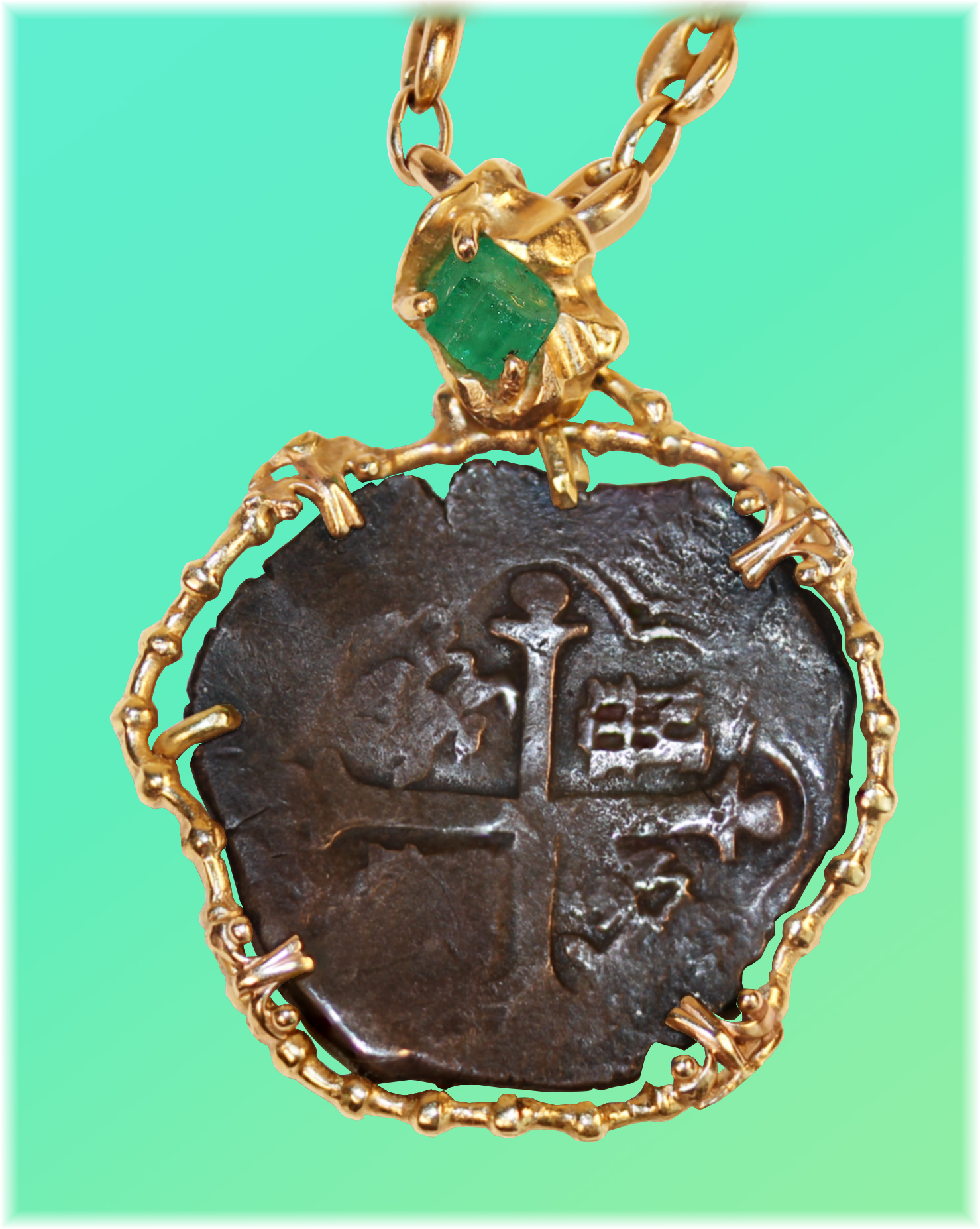
Figure - 2 - Necklace with a Piece of Eight coin and emerald crystal, made and presented to aurthor by the late Manuel J. Marcial de Gomar.
Historical Provenance
What about regional provenance? Does an item have extra value if it comes from a particular region or place? Yes.
Gemstones can vary in price depending on the mine or country from which they are sourced. An emerald from the Coscuez mine in Colombia is more coveted than most emeralds mined elsewhere. A Colombian emerald is worth more than a corresponding emerald from Brazil. Thumb into the colored stone section of the GemGuide and you will encounter variable pricing for the same gemstone depending on the country of origin.
"Our hands-on research into market activity for colored stones indicated that country of origin was a type of provenance and needed to be separately listed with prices. That's why the GemGuide took the obvious step to make that information available to our subscribers," said Stuart Robertson, GemGuide research director and president of parent company Gemworld International.
Antepenultimate Breakdown
In review, the appraiser must identify provenance if it exists (third from the last thing to do, or antepenultimate). Seek the market where that item and its provenance most often sells (second from the last thing to do, or penultimate). Determine value and state its provenance in the appraisal (the last thing to do, or ultimate).
Written by Bill Hoefer

|

|

|
|

|
|
1. Solly, M. (2021, Feb. 1) Amateur treasure hunter unearths missing centerpiece of Henry VIII's crown. Smithsonian Magazine. Back to Text ↑ ↑ ↑
2. Advanced Personal Property Appraisal Course, page 520. Back to Text ↑ ↑ ↑
3. International Society of Appraisers Core Course, 2020, page 9-5. Back to Text ↑ ↑ ↑
4. Babcock, H.A. (1980) Appraisal Principles and Procedures (pp. 147). American Society of Appraisers. Back to Text ↑ ↑ ↑
5. Published in Gem Guide, July-August 2024, Volume 43, Issue 5, pages 15-16.
6. Article illustrations by Bill Hoefer.
7. Other illustrations - IStock.com.